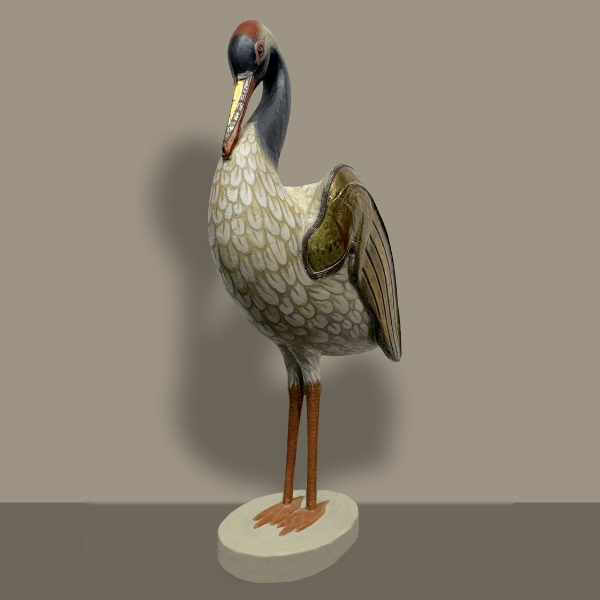
Hamsa: Flight of Purity
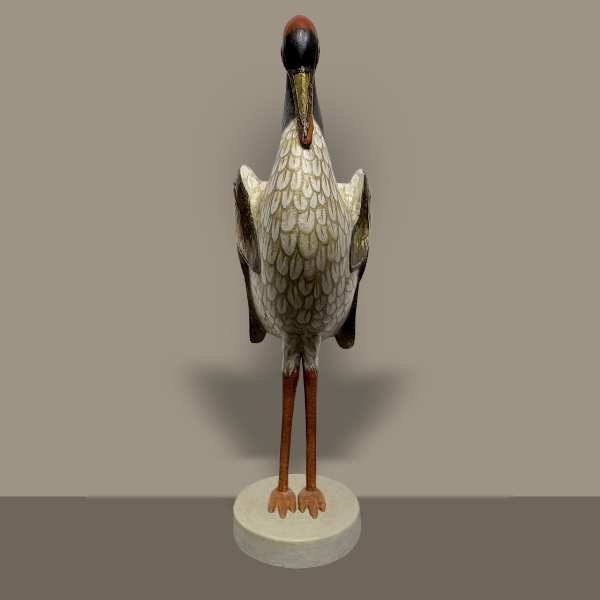
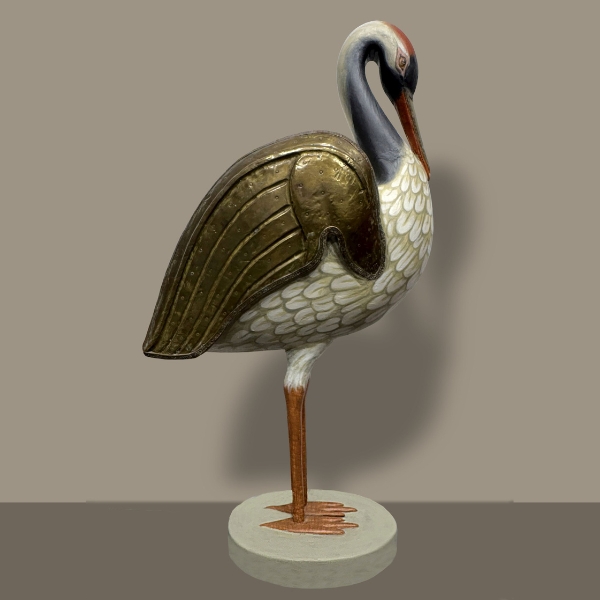
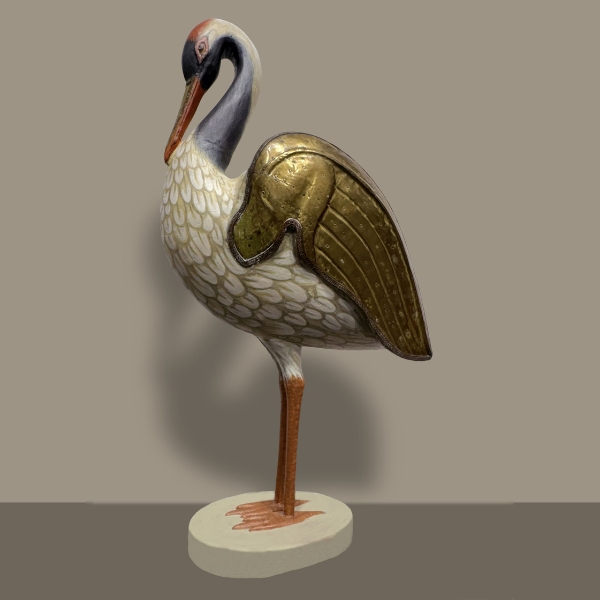
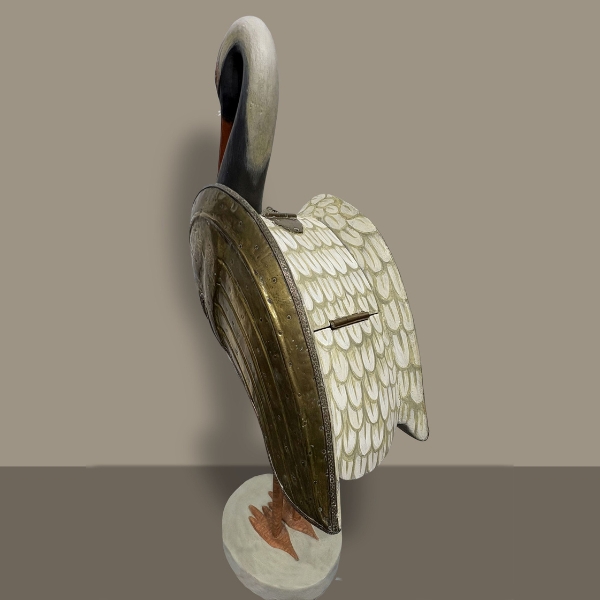
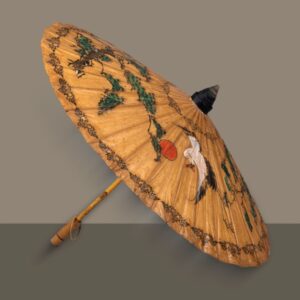
A gilded crane poised in balance with grace. The sculpture resonates beautifully with Indian craft sensibilities, where symbolism, materiality, and ornamentation converge to create more than just an object—it becomes a cultural narrative.
- Mixed Materials: The interplay of painted feathers, metallic gold wings, and embossed textures reflects the Indian tradition of combining diverse materials—wood, stone, metal, and paint—to heighten both tactile and visual richness.
- Ornamentation: The gilded wings echo the Indian penchant for embellishment, seen in temple carvings, miniature paintings, and jewelry. Gold is not just decorative but symbolic of purity, prosperity, and divine energy.
- Stylization: The crane’s elongated form and poised stance recall the stylized depictions in Mughal miniatures and South Indian bronzes, where natural forms are refined into graceful, almost meditative gestures.
- Cross-Cultural Echoes: While cranes are revered across Asia (Japan, China, Southeast Asia), Indian artisans often absorbed and reinterpreted these motifs, blending them with local aesthetics. The gilded wings here could be read as a fusion of Indian craft with broader Asian influences. It resonates with the Japanese ethos of mono no aware—the gentle awareness of impermanence and beauty.
- Sustainability & Continuity: Such works embody the Indian craft ethos of continuity- where traditional motifs are adapted into modern decorative pieces, ensuring heritage lives on in contemporary contexts.
Categories: Artefact, Indian Art

Reviews
There are no reviews yet.